This will likely be my longest curriculum post EVER. Unless you're on the quest for high school physics for your own homeschooler, you're not likely to find this helpful or interesting. You've been warned.
Written at the end of 8th Grade:
It took all year, but we finally found a physics curriculum that we enjoy...just in time for high school! We've had a great introduction to physics this year through Khan Academy, but it also had it's very frustrating moments. Khan Academy has good videos but does not include resources for reinforcing lesson materials or for DOING something with concepts (labs, etc...). This means that the material goes by too fast and retention is low.
We're looking forward to digging in more using The Physics Classroom, a free online resource for physics teachers and homeschoolers. We did invest $25 to order to CD with answers to the free worksheets. The CD is fabulous and includes the answer worksheets in both Word and PDF formats, as well as all the regular worksheets without answers. The answer sheets include detailed explanations, not just the short answer!
The Physics Classroom has a broad range of resources and appears to be growing constantly! The site includes online text, with sample problems embedded in the materials. Students read the text, solve the sample problem, and then click a button to reveal the answer. There are interactive demonstrations and games, suggested labs, ACT prep tests, and "Minds on Physics" modules for students to complete to demonstrate mastery of the material (using a mobile app). The mobile app comes in six student parts, each costing $1. If you wish to have a teacher account to award credit to your student, the teacher account is $50. If the student is logged in "for credit" they get a status bar and "health points." Unfortunately, when we tried the app there were clearly a lot of bugs still to be worked out, and we didn't use it.
November: 9th grade...
At the beginning of the year, I had a bit of a crisis about whether The Physics Classroom was going to cover everything we wanted with the rigor we wanted. So, I caved in and purchased the Holt McDougal Physics Homeschool Package. This was the worst homeschool curriculum mistake I have ever made. I am NOT kidding.
The homeschool package comes with a "premium" online teacher edition, which is completely impossible to navigate. Both the regular teacher's edition and the premium version are part of the package, and the parent/teacher has to sort out which materials are in which version because the premium version is simply a supplement, requiring clicking back and forth between the general teacher text and the premium content.
Only some of the problems
in the student text actually have step by step solutions in
the solution manual, though this is marketed to homeschoolers as a ready-to-go curriculum. Headings
do not match between the teacher or student text, which means that I spent inordinate amounts of time trying to match the questions up to see if I was looking at the right problem set.
Teacher materials were organized by category (labs, quizzes, presentation materials, worksheets), rather than sequentially. Perhaps, if I had paper copies of all of these things, I could lay them out on a desk together to make plans for what to use and when, but having them online means flipping back and forth between tabs or windows constantly. Requiring the use of drop-down menus to select only discreet portions of chapter and text, rather than having all the materials for an entire chapter in one place also made it extremely difficult to reference back and forth in a chapter efficiently. I felt that I had access to a whole lot of really wonderful AND totally useless material.
In addition, there was no indication on the website that the online access to teacher materials expires in a year. I did not find this out until I received my access code. It was my impression from the website that I was purchasing a curriculum PACKAGE, not just a student text with one year of online access to teacher text, solutions, supplements, labs, and assessment tools. If I had known this I would have never, never, never purchased the "package," especially at this price. A package, in my opinion, includes more than one item.
Finally, when I called the company and begged for a refund (past the 30 day return policy...so, my bad), I was offered a paper copy of the teacher text, which, theoretically, might solve some of the problems. They said they'd send me a link in my email. They did. They send a link for me to PURCHASE the $150 Teacher Edition. No thank you. I didn't have the will to call them back, though I should have. Again, my bad.
And, so, we went back to The Physics Classroom. I realized upon our return to The Physics Classroom that part of the reason we'd been struggling so much with the Holt text was that the explanations were both wordy and poor. The Physics Classroom teaches much of the same material more succinctly, and they do it much better. I found that the Holt book was actually skipping steps in the explanations, though the text uses way more words. Ugh. After completing another unit of The Physics Classroom, I had Mane take the Holt test for the corresponding chapter. She passed the test just fine.
But then...
In February, I realized that, although The Physics Classroom is tremendously well organized, understandable, and affordable...we were dragging our feet to get to physics every day. Now, I'll take responsibility for the fact that this is partly my fault. I had a personal crisis or realizing that my child is being cheated out of having a teacher who can actually make a the physics connects, relate fascinating examples, and pull out labs and activities to demonstrate concepts. The thing is, I'm not a physics teacher. I took physics in high school and enjoyed it. I can understand the physics textbooks. But I don't have enough experience with the material to really grab a student's attention with stories and examples. This is the plight of homeschooling. I had to make some peace with that. But that's for another post.
Perhaps the biggest downfall of The Physics Classroom is that the labs are not embedded. They have links to great labs, but they aren't part of the curriculum. They're scattered throughout the internet on other websites. The Physics Classroom people have done an extraordinary amount of work gathering resources and providing links. But, unless I put a lot of time into planning, I can't make this work for us. I need embedded labs. And I also know that labs and stories are the only things that are going to save Mane from hating physics forever. Yes, she's getting the materials (concepts, equations, and application) from The Physics Classroom, and she's getting them really well. But she's bored and views physics as just another math class.
So, I started researching. There are so many interesting podcasts, books, and movies related to physics, but I'm not in any position to cobble them together into a curriculum, and I don't want to abandon the math and equations altogether.
Then I found Guest Hollow's Conceptual Physics for High School. It is marketed as math-free, but there are optional math components (which we'll surely be using). We're on week 3. Yes, we switched. Yes, it's March. Yes, I feel a little insane. But we are SO HAPPY. Guest Hollow's curriculum is a schedule of books, movies, activities, TED Ed videos, and labs that brings all those wonderful resources together in a coherent way.
This kind of switch is not for everyone. And I confess to some trepidation. I talked with Mango all weekend long before we decided to switch. He's a high school teacher and familiar with the necessary material for doing well on the ACT. He's also put a lot of thought into what it really means to prepare students for what they want to do in life. Yes, Mane is capable of completing a very math-oriented physics program. But how will it serve her? She's a storyteller. She loves to write. If we want to give her any hope of becoming a "real" writer, she needs a foundation of stories. She also needs a foundation of the fundamental concepts and principles that make the world work. J. K. Rowling could not have written the Harry Potter series to be the rich, nuanced, and complex story that it is without the foundation of a solid education. It doesn't have to be a traditional education, but it has to be broad and deep. That's how we view the Guest Hollow curriculum. It's full of the books that make the connections between physics and real life. The books are full of history and philosophy. The movies tell the stories of real people involved in real physics in a way that kind of makes you want to try it yourself. The videos and labs are quick, fun, and memorable.
If all goes well, we'll be using this curriculum throughout the summer. It's engaging enough to consider it a fun summer family activity!
P.S. In case you're worried, the math that Mane needs to be successful on college entrance exams is included both in her actual math text (Saxon) and in the optional portion of Guest Hollow. We may also supplement to be sure the use of equations is reinforced. Likely, there will be a follow up post when we're finished. I'll let you know how it goes.

Monday, March 20, 2017


Saturday, May 28, 2016
The Story of Science

“I’m convinced, and I hope to convince you, that science is not just for scientists. In the twentieth century, we compartmentalized knowledge; in the information age, that doesn’t make sense. Today, you can be a hermit on a mountain peak and still have access to the world’s learning. For scholarship to be so available, so democratic, is unprecedented in world history. To use that opportunity well, we all need to be generalists first. And no field of knowledge is as basic or as creative as science. . . . that human quest to understand the universe underlies almost all other creativity."The above quote is from Joy Hakim's website. She is the author of a 3-part series called "The Story of Science." We've been slowly making our way through the first book, Aristotle Leads the Way, this year, alongside our studies of physics and history and philosophy. This is the book that ties so much of the subject matter together. Early scientists were writers and philosophers. They were historians and mathematicians. The science could not be separated out into it's own compartment, the way it so often is now. We find ourselves frequently moving from this book to the Ponderables books on Philosophy, Math, and Physics.
-A Writer’s Reasons, from The Story of Science, Aristotle Leads the Way

Friday, May 27, 2016
The Thinking Toolbox
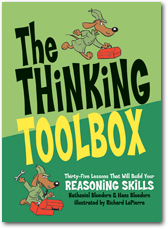
A side note: These books do have a political and religious bias. It isn't overwhelming. I just see it popping up in the use of particular examples. Examples regarding the existence of God are obviously biased toward faith and belief, rather than atheism (which is fine with us, since we believe in God). This book presents a sample conversation near the beginning that seemed to favor young-earth creationism. One could easily extend the example, though, to discuss responses to the arguments presented. The authors do not take a position, though they do discuss how the creationist was able to make his argument better by planning for the responses of the evolutionist. It's a valuable lesson about looking at your own argument from the opposite perspective. Overall, it's not enough to stop me from recommending this book to others.
Tuesday, May 24, 2016
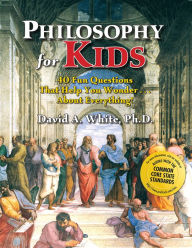
Philosophy for Kids
We received Philosophy for Kids by David A. White as a Christmas gift in December from Grandma Philosopher...and we've been answering questions like "What is Friendship?" "How do we define intelligence?" and "Is charity a human obligation?" ever since...
 The book is laid out in a fairly simple format. Each chapter/question is about 3 pages long and presents a question along with the perspectives of 1 or 2 well-known philosophers. The author leads the student through a series of questions to sort out their own thoughts and finishes the chapter with MORE questions for further discussion or writing. We've been using those final questions as writing assignments. By the time we're finished with this book, Mane will have her own philosophy book! We've enjoyed working through the questions and making connections to The Story of Science (more on that in another post) and the Ponderables Philosophy book:

Environmental Science
Hey...I wrote this back in September 2015 and forgot to hit "publish"...
This school year we've making a lot of connections...connections between history and politics...between fields of science like biology and physics...and between science and our lives... We've done a lot of exploring the connection between the food we eat, the environment we live in, the air we breathe, the products we produce, and the money & politics connected to those products. Here's a list of some of the things we've read, movies we've watched, and websites we've used so far:
1) It started with the audiobook version of Animal, Vegetable, Miracle by Barbara Kingsolver with Steven L. Hopp (Kingsolver's husband) and Camille Kingsolver (Barbara Kingsolver's daughter) . I was reading it for book club, and I was reading huge chunks of it our loud to the family. Finally, I just started playing the audiobook for everyone. I became part of the daily conversation to talk about where the food in our fridge originated. We started making a point of checking labels before we bought...not for nutritional information but for location. We took this statement to heart from Kingsolver's book:
2) We started visiting farmer's markets and discovered the rules for our local markets. Just because a food is at the market does not mean it's local. I've had to jump out of my introverted comfort zone to converse with food vendors about their food. Mane had the experience of learning how a local Hmong family grows peanuts in Minnesota. (Yes, peanuts in Minnesota!!)
3) We used the Minnesota Grown website to learn about what is in season when in Minnesota.
4) We started listening to the Climate Change podcast on public radio.
5) Back in 2009, Mane and I attended a pre-release showing of No Impact Man at the Walker Art Center and heard Colin Beaven speak in person. This year we shared the movie with some friends and watched it again. (A word of caution: The language is not all rated G and pregnancy loss is mentioned in the film.) The movie such a contrast to Barbara Kingsolver's book. Kingsolver and her family carefully planned (for several years, actually) how they would spend a year eating locally. Colin Beaven and his wife, Michelle, jumped into their "no impact" project with very little preparation. It's interesting to see people coming at the challenge of living differently from some extreme ends of the spectrum, and it was a great opportunity to reflect with Mane on how change is a process.
6) Then we watched Food, Inc., a difficult but valuable film. We learned to look away when the scenes got a little too graphic. This movie brought our focus in from local eating to ethical eating. A friend of mine talks about her daughter, who won't eat a chicken unless it's been hugged. This film brought us to that place...where we want to know how our food has been grown, not just where.
7) We started to move out from the food discussion and into a discussion of plastic consumption with the movie Addicted to Plastic. You can see a brief presentation with a few of the relevant facts here: Addicted to Plastic by Jamie Lamourt.
8) Today we watched Plastic Paradise. As I type, Mane is creating a blog post for her own blog of things she learned from the film. (Another word of caution: The film shows scientists cutting open dead birds to see all the plastic inside their bodies. Not for the weak-of-stomach.)
9) AND we freaked out a little bit about plastic in our clothes...
There's been a fair amount of talk in educational circles about how and when to present environmental issues to children. There's some argument about how much is too much and whether too much information too early has the backward effect of depressing children, rather than inspiring them.
**********
UPDATE in May 2016:
It has certainly been a year of tackling the environmental issues! Mane wrote a blog post for her Go Green Club on the problem of plastics in the world, we followed our local political movement toward getting plastic bags out of Minneapolis stores, and we've converted to bar soap and re-fill-able shampoo bottles! We're currently working on solving the problem of plastic use while camping. (It's really easy to put everything in the cooler in a ziploc!) And we're wondering about hosting the Bible study kids for outdoor summer play without plastic toys. I would say that, far from depressing Mane, she's been so inspired by the current movements toward reducing plastic use and production. And she's still working toward making a difference in our corner of the world.
This school year we've making a lot of connections...connections between history and politics...between fields of science like biology and physics...and between science and our lives... We've done a lot of exploring the connection between the food we eat, the environment we live in, the air we breathe, the products we produce, and the money & politics connected to those products. Here's a list of some of the things we've read, movies we've watched, and websites we've used so far:
1) It started with the audiobook version of Animal, Vegetable, Miracle by Barbara Kingsolver with Steven L. Hopp (Kingsolver's husband) and Camille Kingsolver (Barbara Kingsolver's daughter) . I was reading it for book club, and I was reading huge chunks of it our loud to the family. Finally, I just started playing the audiobook for everyone. I became part of the daily conversation to talk about where the food in our fridge originated. We started making a point of checking labels before we bought...not for nutritional information but for location. We took this statement to heart from Kingsolver's book:
“If every U.S. citizen ate just one meal a week (any meal) composed of locally and organically raised meats and produce, we would reduce our country’s oil consumption by over 1.1 million barrels of oil every week” (Steven L. Hopp, p. 5)I wouldn't reach for this book a whole lot sooner than 7th or 8th grade, and I wouldn't expect even an 8th grader to care about every single word of the book...but as background audio while knitting, drawing, or painting, it was perfect. The chapters by Camille Kingsolver were especially helpful in making the book "user friendly" for a younger audience. The audiobook is read by all 3 authors. So, the listener literally hears the change in voice and perspective.
2) We started visiting farmer's markets and discovered the rules for our local markets. Just because a food is at the market does not mean it's local. I've had to jump out of my introverted comfort zone to converse with food vendors about their food. Mane had the experience of learning how a local Hmong family grows peanuts in Minnesota. (Yes, peanuts in Minnesota!!)
3) We used the Minnesota Grown website to learn about what is in season when in Minnesota.
4) We started listening to the Climate Change podcast on public radio.
5) Back in 2009, Mane and I attended a pre-release showing of No Impact Man at the Walker Art Center and heard Colin Beaven speak in person. This year we shared the movie with some friends and watched it again. (A word of caution: The language is not all rated G and pregnancy loss is mentioned in the film.) The movie such a contrast to Barbara Kingsolver's book. Kingsolver and her family carefully planned (for several years, actually) how they would spend a year eating locally. Colin Beaven and his wife, Michelle, jumped into their "no impact" project with very little preparation. It's interesting to see people coming at the challenge of living differently from some extreme ends of the spectrum, and it was a great opportunity to reflect with Mane on how change is a process.
6) Then we watched Food, Inc., a difficult but valuable film. We learned to look away when the scenes got a little too graphic. This movie brought our focus in from local eating to ethical eating. A friend of mine talks about her daughter, who won't eat a chicken unless it's been hugged. This film brought us to that place...where we want to know how our food has been grown, not just where.
7) We started to move out from the food discussion and into a discussion of plastic consumption with the movie Addicted to Plastic. You can see a brief presentation with a few of the relevant facts here: Addicted to Plastic by Jamie Lamourt.
8) Today we watched Plastic Paradise. As I type, Mane is creating a blog post for her own blog of things she learned from the film. (Another word of caution: The film shows scientists cutting open dead birds to see all the plastic inside their bodies. Not for the weak-of-stomach.)
9) AND we freaked out a little bit about plastic in our clothes...
There's been a fair amount of talk in educational circles about how and when to present environmental issues to children. There's some argument about how much is too much and whether too much information too early has the backward effect of depressing children, rather than inspiring them.
**********
UPDATE in May 2016:
It has certainly been a year of tackling the environmental issues! Mane wrote a blog post for her Go Green Club on the problem of plastics in the world, we followed our local political movement toward getting plastic bags out of Minneapolis stores, and we've converted to bar soap and re-fill-able shampoo bottles! We're currently working on solving the problem of plastic use while camping. (It's really easy to put everything in the cooler in a ziploc!) And we're wondering about hosting the Bible study kids for outdoor summer play without plastic toys. I would say that, far from depressing Mane, she's been so inspired by the current movements toward reducing plastic use and production. And she's still working toward making a difference in our corner of the world.
Thursday, June 11, 2015
Thousand Word Thursday - Friend Groups
Who says homeschoolers are unsocialized?! Mane is part of both of these groups on a weekly basis. Such fabulous kids!
 |
| Homeschool Group |
 |
| Swim Team |
Wednesday, June 10, 2015
Make your own Bubble Tea!

Our first stop was Shuang Hur Oriental Market on Nicollet Avenue. (This is where we bought banana leaves to wrap the lembas for Mane's Lord of the Rings birthday party.) We found lychee jellies at Shuang Hur. Here's Mane dropping them in mango orange juice (not quite a mango smoothie, but still very yummy):

 |
| Multi-Colored Tapioca Pearls! |
Tuesday, June 9, 2015
Niagara Cave and the Alohomora podcasts...
Over Memorial weekend we found ourselves in serious need of a daytrip. So, we took Mango to see Niagara Cave in Harmony, MN. Mane and I went on the cave tour last summer and thought it was great. We knew Mango would love it, and the drive was a good excuse to spend some time together without so many distractions.
We listened to Alohomora podcasts for part of the drive. We've gotten hooked on them over the past several months...while cleaning the house and doing puzzles and driving in the car. If you're a Harry Potter fan, you're sure to enjoy these podcasts. The hosts are conducting a "global re-read" of the series with weekly analysis of each individual chapter! They're currently reading Half-Blood Prince, but all the podcasts are available for download.
In any case, the rain stopped long enough for us to get a photo outside the cave:

It's awfully difficult to get photos inside:

It's like an underground canyon. Sometimes you can see the walls go up 150 feet overhead! The underground waterfall is amazing! The cave stays a steady 48 degrees Fahrenheit and damp all year. We especially enjoyed seeing the chapel, the echo chamber, and the mineral deposits that glow in the dark after you shine a black light on them. The tour is a mile long walk, covering 250 stairs. So, it's not for the faint of heart...or the claustrophobic. For those of us who had been sitting in the car for several hours, it was welcome exercise!
We listened to Alohomora podcasts for part of the drive. We've gotten hooked on them over the past several months...while cleaning the house and doing puzzles and driving in the car. If you're a Harry Potter fan, you're sure to enjoy these podcasts. The hosts are conducting a "global re-read" of the series with weekly analysis of each individual chapter! They're currently reading Half-Blood Prince, but all the podcasts are available for download.
In any case, the rain stopped long enough for us to get a photo outside the cave:

It's awfully difficult to get photos inside:

It's like an underground canyon. Sometimes you can see the walls go up 150 feet overhead! The underground waterfall is amazing! The cave stays a steady 48 degrees Fahrenheit and damp all year. We especially enjoyed seeing the chapel, the echo chamber, and the mineral deposits that glow in the dark after you shine a black light on them. The tour is a mile long walk, covering 250 stairs. So, it's not for the faint of heart...or the claustrophobic. For those of us who had been sitting in the car for several hours, it was welcome exercise!
Monday, June 8, 2015
Game Schooling - Munchkin Quest

Looking for a fun, humorous, strategy game to play on a long, rainy evening? Munchkin Quest is your answer! Be warned that it takes a while to learn how to play. And the game cards can be slightly inappropriate - in a medieval and/or renaissance fair kind of way. I wouldn't attempt to play with kids under 12. Having said that, it's one of our games of choice for a family game night. Players build the board as they go. Every time a player adds a new room to the board, a monster appears, and they have to fight the monster by combining dice rolls with the cards they have in play. As players defeat monsters, they move up levels until they return to the center of the board and fight the "Boss Monster" to win the game. Turns are long and can include adding new rooms, fighting monsters, running from monsters, dropping treasure, searching for treasure, scoring cards, and giving charity! (This gives other players plenty of time to eat all the snacks, get something to drink, and change the music!) It's a great game for practicing strategy and logic...and laughing a lot!
Friday, June 5, 2015
Tour De Nature Centers - Westwood Hills
Westwood Hills is a little nature center tucked in next to a residential area in St. Louis Park, MN. We were tired of the indoors and decided to go have a picnic with friends the other day. We spread out our picnic blanket under the trees near the fort-building area and not far from the playground:

 We walked the Children's Nest Egg path to discover the nest lined with shiny metallic "feathers" reflecting the trees and the sky:


 Finally, we went for a walk in the woods, where a daddy goose was standing guard on the path. We stayed out of his way after he started hissing and walking straight toward the 3yr old!


Thursday, June 4, 2015
Thousand Word Thursday - Swim Meet

Mane aged up to the 13-14 year old category after her birthday this May, and she made two new qualifying times at her meet last Friday night!! She started the swim team in November 2013. This is her "gym class" (4.5+ hours swimming each week). She swims at the YWCA with kids from all over Minneapolis, not just homeschoolers. Learning to get around the YWCA on her own, take care of her own stuff, and get to practice on time been a tremendous growth experience for her. Her team is made up of kids of all different social, economic, and cultural backgrounds, and her experience with her teammates and coaches has been overwhelmingly positive. We are so grateful that she's found her niche in the sport of swimming and that she has the opportunity to continue to grow with such a great team!
Wednesday, June 3, 2015
Game Schooling - Storage Edition
Plastic soap containers or similarly-sized snack containers work great for storing card games:
 I found these at the dollar store. I love that the lid clips to close the container. Now we can do away with rubber binders holding decks of cards together!

Tuesday, June 2, 2015
Dragon Box Algebra App
On Friday I mentioned Tech Time's list of the 15 Best Apps for Homeschooling. I linked to the article on my facebook page, and a friend of mine posted a few days later that her kids were all over the Dragon Box Algebra app for ages 5+. She posted:
 Even better news? Dragon Box has a geometry App: Dragon Box Elements. We cannot wait to check it out!!
...its algebra for kids and the littles are obsessed with it. ... [My son] LOVED it. He finished the whole thing in 4 days. On the second problem, even though his age is all pictures, he looked at me and said "This is math. I like math." That in and of itself made it the best $5 I've spent in a very long time.This is the app that sneakily teaches algebra while your children think they're just playing a game! Mane is finishing up pre-algebra this year and will be starting Algebra 1 over the summer or this autumn. I decided to give Dragon Box Algebra 12+ a try to help her approach algebra from another angle and to make conceptual sense of algebraic concepts. I believe alternate presentations of the same concept are essential to math success, and approaching math from different angles builds flexibility in the brain. This app does exactly that. From the website:
DragonBox presents the player with whimsical icons that must be manipulated until the ‘Dragonbox’, representing the unknown variable, is isolated on one side of the game board. ... Through the course of play, these icons are gradually replaced with numbers and variables until the player is solving real equations. The rules of variable manipulation are discovered through experimentation, and higher star ratings are obtained by manipulating variables more efficiently to isolate the ‘box’ in fewer steps.Mane was dubious when we downloaded the app. The program does not present with rules. Players are expected to learn through play. This makes the rule-following child feel a little insecure...in a good way. She tried out the app with me and was quick to put it away. Later that day, however, when she'd been "forced" to find something to do while waiting for Mango to pick her up from swim practice, she took the time to explore and figure out the game, and now she's hooked.

Friday, May 29, 2015
Homeschool - Learning a Foreign Language
We are embarking on a journey to learn German. In the past, I've tried
to get Mane to learn some Spanish. She's been everywhere from totally
resistant to very mildly interested. So, we dropped any attempts to work
on a foreign language for a while. This
semester I started talking to her about how she's going to need a
foreign language in order to graduate from high school. She
started casually mentioning wanting to learn German. She asked
if DuoLingo (a language learning app that we've used for Spanish) has
German. We checked, and she immediately started working through the
first German lesson! For weeks now she's been playing around with German
learning apps, attempting to use all the German phrases she's learning,
and organizing a binder for keeping German vocab!
We've tested out a number of programs and apps, and it seems that a quick review might be helpful to others, who are also trying to learn a language at home. Here's our list:
In the meantime, we're labeling everything in the house in German...
We've tested out a number of programs and apps, and it seems that a quick review might be helpful to others, who are also trying to learn a language at home. Here's our list:
- DuoLingo - Offers a huge range of languages, used by millions of people around the world, listed as one of the 15 Best Apps for Homeschooling by Tech Times, and it's FREE! The program includes listening, reading, writing, and speaking components. Progress is tracked and lessons are personalized. There's even an educator version now that allows teachers to track individual student progress. The only drawback that we have experienced is that Duolingo does not introduce common conversational phrases early in the program. So, the user learns to say, "I am a girl," and "The woman eats bread," but not, "Hello," or "Good Morning." Duolingo is, however, great for learning noun gender, verb conjugation, and general vocabulary. We love DuoLingo!
- Busuu - We were really excited about Busuu at first. Like DuoLingo, Busuu offers a range of languages, is used by millions of people, has won a number of awards, and is free. The activities are different from those used by Duolingo. So, while it offers all the same components, they're presented in a different way. However, after a short ad-free period when we first began using the app, we were quickly overrun with ads. It was too distracting and would make the app extremely difficult to navigate for younger kids.
- MosaLingua - Great for learning conversational phrases, and it's also free. The program offers flash cards for "learning" phrases, followed by activities, and then intermittent, timed practice based on research demonstrating how often people need to review to move things to long term memory. The app sends notifications to the user's mobile device that it's time to practice, and it tracks how many phrases have been learned. We have found this app indispensable for learning useful conversational phrases.
- Transparent - Free access to this online language learning program is available through Hennepin County Libraries. We found the program to be too drill/flash card oriented. There were some great activities, but it's no fun to get stuck on the flash card portion because it keeps setting you back every time you miss something. The program also relies on the user's feedback about whether they remembered a particular word or phrase, rather than having a way to test if the word or phrase was remembered.
- LiveMocha - This is a free online program. It does not have a mobile app, and this was a serious drawback for us. LiveMocha is also somewhat similar to the free program our library offers. We haven't gone back to it in a while now.
- Coffee Break German - We LOVE Coffee Break German, the free podcast offered by Radio Lingua Network. We are only seven episodes in, but these are so rich in vocabulary, grammar, and culture that we have learned volumes! Radio Lingua offers instruction in French, German, Spanish, and Italian. They also have written materials available for purchase on their website.
In the meantime, we're labeling everything in the house in German...
Thursday, May 28, 2015
Reflex Math
In my previous post on Spelling Apps, I mentioned how much we love Reflex Math, and I still cannot say enough good things about this program. It isn't free. I guess that could be viewed as a drawback, but the truth is that it's worth every single penny, and the people who created it should get to make a living. So, I don't mind paying for it.
Since the very beginning of homeschooling, it's been apparent that Mane is a very different learner. She doesn't memorize math facts or spelling words just by seeing them regularly. She's been doing Saxon math since the 4th grade and was STILL multiplying and dividing very, very slowly at the beginning of this school year (7th grade). She was frustrated that math lessons were taking so long, and I was worried about her ability to be successful in higher mathematics. So, I set out to find a way for her to memorize math facts, aside from using them in her math lessons and without resorting to me quizzing her with flashcards. Knowing that, for Mane, sometimes the trick is just lots and lots of repetition, we tried out XtraMath. It's a free, drill-based program. Practice is timed and takes just a few minutes a day. The program tracks learner progress and gradually moves them through the math facts. However, a year later, Mane had not made a whole lot of progress. Truthfully, she wasn't fond of the program, and she dragged her feet about using it.
This year I heard about Reflex Math and decided to give it a try. They offer a free trial period to test out the program before buying. We liked it enough that we invested $35 for a one year subscription.
Similar to XtraMath, Reflex Math tracks learner progress and moves gradually through the math facts. Unlike XtraMath, however, "fact families" are introduced together so that learners can group or "chunk" their learning to assist and accelerate memorization. Reflex Math uses games for practice following a "lesson" portion of the program (which is also game-like). Learners feel successful from the beginning because the program is designed to give only a certain number of unknown facts mixed in with known facts. Carefully spaced repetition of unknown facts "jogs" the learner's memory as they play the games. Learners choose an avatar when they start the program, and playing games earns them tokens to spend on accessories, clothes, hairstyles, and a number of other things for their avatar. New games are unlocked based on how many days the program has been used. So, a learner does not have to meet a certain number of known facts to play new games. They just have to put in the effort to practice regularly.
What we love about Reflex Math:
Since the very beginning of homeschooling, it's been apparent that Mane is a very different learner. She doesn't memorize math facts or spelling words just by seeing them regularly. She's been doing Saxon math since the 4th grade and was STILL multiplying and dividing very, very slowly at the beginning of this school year (7th grade). She was frustrated that math lessons were taking so long, and I was worried about her ability to be successful in higher mathematics. So, I set out to find a way for her to memorize math facts, aside from using them in her math lessons and without resorting to me quizzing her with flashcards. Knowing that, for Mane, sometimes the trick is just lots and lots of repetition, we tried out XtraMath. It's a free, drill-based program. Practice is timed and takes just a few minutes a day. The program tracks learner progress and gradually moves them through the math facts. However, a year later, Mane had not made a whole lot of progress. Truthfully, she wasn't fond of the program, and she dragged her feet about using it.
This year I heard about Reflex Math and decided to give it a try. They offer a free trial period to test out the program before buying. We liked it enough that we invested $35 for a one year subscription.
Similar to XtraMath, Reflex Math tracks learner progress and moves gradually through the math facts. Unlike XtraMath, however, "fact families" are introduced together so that learners can group or "chunk" their learning to assist and accelerate memorization. Reflex Math uses games for practice following a "lesson" portion of the program (which is also game-like). Learners feel successful from the beginning because the program is designed to give only a certain number of unknown facts mixed in with known facts. Carefully spaced repetition of unknown facts "jogs" the learner's memory as they play the games. Learners choose an avatar when they start the program, and playing games earns them tokens to spend on accessories, clothes, hairstyles, and a number of other things for their avatar. New games are unlocked based on how many days the program has been used. So, a learner does not have to meet a certain number of known facts to play new games. They just have to put in the effort to practice regularly.
What we love about Reflex Math:
- Free Trial Period
- "Fact Family" approach to math facts (Example: 3x4=12, 4x3=12, 12/3=4, 12/4=3)
- Progress Tracking (tracks days/minutes used, individual facts learned, percentage gain, total number of problems solved...)
- Individualized game play (spaced repetition of known & unknown facts based on individual student progress)
- Avatar reward system (use tokens earned through game play to purchase things for your avatar)
- New games unlocked at intervals based on number of days the program is used
Thursday, May 7, 2015
Fun, Effective Spelling Apps and/or Programs
Recently we went on a quest for apps or programs that might help Mane with spelling. Spelling does not come naturally to her, and the key to spelling for her is lots and lots of repetition. I seriously dislike quizzing her, and I have a hard time creating new word lists now that we've finished Logic of English. Mane has become brilliant with her math facts by using the online program Reflex Math. So, I was hoping for a spelling app or program that would work similarly. Because it's been such an involved process, I thought others might benefit from the information.
First, here's the short list of free android apps we tried and why we discarded them immediately:
First, here's the short list of free android apps we tried and why we discarded them immediately:
- Brilliant Spelling - uses google voice and is super annoying
- Spell Friendzy - user must keep doing the same things over and over to have enough points to unlock new levels
- Spelling Mastery - cannot actually find this app in the play store
- Spellvetica - would not load
- Spelling Bee - opened with ads immediately
- Painless Spelling - designed to go with the book and also would not load
- Big IQ Kids - does not autoselect words or move through a sequence automatically
Ultimate Spelling was awful. Within a few hours of downloading the program and testing it out, I had contacted customer service asking for my money back and uninstalled the program. Here's why:
Things I wanted:
- auto-generated word lists
- auto-tracking of progress
- spaced review/repetition
- individualized and automatic movement through the program
- the ability to get started quickly with expert lists, perfect for any grade level 1-10
- fun games based on levels of processing, operant conditioning, and spaced repetition
- detailed reports on spelling improvement (which I somehow took to mean that spelling improvement would be automatically assessed and progress through the program would happen automatically)
- expert lists that were FORTY-FIVE words long - resulting in me needing to sort and manually input lists because that's WAY TOO LONG for a new word list
- spelling practice that involved flashing the word for a few seconds and then having the student spell the word (Mane could do this absolutely forever and still never actually remember how to spell the word.)
- a terribly outdated and ugly user interface that wasn't nearly as engaging as their website
- games - not any better (and possibly worse because of the boring interface) than the free ones at Spelling City
- no automated determination of when a word is mastered or automatic, individualized movement to the next word or group of words. What I mean by this is that words have to be marked as "mastered" by either the learner or the teacher. The program does not have a built in system for determining mastery, taking old words off the list, or adding new words. Basically, everything has to be done manually, and the teacher/parent still has to quiz the student (on multiple occasions over time) to determine if a word has been mastered.
So, we moved back to Learn That Word. We had tried it for free and then discovered that, although parts of the website are always free, the spelling quiz component of the website requires the purchase of "tokens." After such a bad experience with Ultimate Spelling, we decided to spend the money to purchase the smallest number of tokens and spend a little more time on the program to decide if we wanted to keep going. Learn That is a non-profit organization, which offers the spelling program Learn that Word. I like their mission statement: LearnThat Foundation Manifesto, and I appreciate the page comparing their program to Spelling City, which we used when Mane was younger: Spelling City Comparison.
Learn That Word is a quiz approach, not a "games" approach. But, unlike Spelling City or Ultimate Spelling, it has built-in repetition and review, which matter much more to us right now than games. The program is sequential and doesn’t require you to enter your own lists So, during quizzes the learner hears the word and sees a definition, sample sentence, photo, and blank spaces to represent the number of letters in the word. If the word is spelled incorrectly, the spaces are filled with whatever letters the learner got right. They then try to spell the word a second time. After the second try, the correct spelling is revealed. Words that are spelled correctly on the first try are reviewed later, but they do not become part of the learner's spelling list and they do not use up tokens. Words not spelled correctly will be reviewed according to a spaced repetition pattern and must be spelled correctly a certain number of times to be considered mastered. Once a word is mastered, a token is subtracted from the learner's account. While doing quizzes, learners earn "gold coins," which may be exchanged to play games (like hangman).
We are now 2 weeks into using Learn That Word, and it looks like this will be our program of choice for the next several months, if not years. There is a vocabulary component also, and both the spelling and vocabulary components extend into college level.
Bullet Point list of what's great about Learn That Word:
- auto-generated word lists that can be customized for length
- automated progress tracking and movement through spelling lists based on individual performance and needs
- spaced review of previous words
- earned games
- spelling bee style quizzes
- access to vocabulary component
- optional (but not required) customization of spelling and vocabulary lists
Learn That Word is not a stand-alone spelling curriculum because phonics and spelling rules are not part of the program. I am comfortable with using it right now because Mane has already received (and continues to receive) instruction in phonics and spelling rules. If you want to use it in conjunction with a spelling program, there is an option to input your own words.
*****************
I feel that I should also say a few words about Spelling City. We used Spelling City for an entire school year, and it was excellent. We stopped because Mane was tired of playing the same games every week and was ready to move on to something new. (There are A LOT of games, but after a whole year it was still starting to get old.) I was tired of entering word lists and having to go back and create new lists of previously difficult words in order to make sure she was getting that spaced/timed review. Spelling City does have an option to use lists already on their site, but there is no way for the program to do an automatic spiral review, which is really important for Mane. This is not so important for student to whom spelling comes more naturally.
Bullet Point List of what's good about Spelling City:
*****************
I feel that I should also say a few words about Spelling City. We used Spelling City for an entire school year, and it was excellent. We stopped because Mane was tired of playing the same games every week and was ready to move on to something new. (There are A LOT of games, but after a whole year it was still starting to get old.) I was tired of entering word lists and having to go back and create new lists of previously difficult words in order to make sure she was getting that spaced/timed review. Spelling City does have an option to use lists already on their site, but there is no way for the program to do an automatic spiral review, which is really important for Mane. This is not so important for student to whom spelling comes more naturally.
Bullet Point List of what's good about Spelling City:
- custom OR auto-generated word lists
- really great games
- allows teachers to assign games and activities ahead of time
- program tracks what assignments were done and what words were missed
- writing component allows teacher to log in and offer feedback
If you have questions about our experience with any of these programs, leave them in the comments. I'll see what I can do to answer.
Friday, May 1, 2015
Okee Dokee Brothers

What a delight that we got to see the Okee Dokee Brothers perform with the Minnesota Orchestra this spring! We're looking forward to checking out their concert schedule this summer!

Thursday, April 30, 2015
Thousand Word Thursday - Formal Day at the Homeschool Co-op
 |
| Hair Braiding Practice |
 |
| Vespera worked on Mane's hair while Mane worked on mine... |
 |
| Vespera & Mane |
 |
| All Dressed Up...no shoes for this wood elf! |

Wednesday, April 29, 2015
Game Schooling - Quick Pix Animals

I picked this game up for next to nothing at the homeschool book sale about a month ago, and then I saw it at the science museum store. You know it's a good game when they're selling it at the science museum!
How to Play:
Each player gets 5 cards, which they place face-up in front of themselves. Each card has two animal categories, such as "mammals" or "reptiles" on it. The deck contains animal picture cards. When a card from the deck is flipped up, the first player to match their category card to the animal card keeps the match. I require older kids to call out the correct category, not just slap the right category card down on the animal.

We're finding that even our smallest player is getting pretty good at this game! The category cards have pictures of the animals on them. So, he can identify the matches by using the pictures:
 |
| Just look at his card stash on the couch there! |
Learning:
Younger players practice matching/patterning and eye scanning skills. Older players learn animal classification. Grown-up players learn to be quick...because the kids are FAST! The game rules come with information about classification and all the animals included in the deck. Even our adult players learned some new things about some animals from this game. (Did you know that manatees are hoofed mammals? And that the porcupine is considered a rodent?)
Homeschool in Spring!

It's spring in Minnesota! Time to celebrate with books and bubbles on the front porch!


Subscribe to:
Posts (Atom)

Peregrin House
