Showing posts with label language arts. Show all posts

Thursday, May 7, 2015

Fun, Effective Spelling Apps and/or Programs

Recently we went on a quest for apps or programs that might help Mane with spelling. Spelling does not come naturally to her, and the key to spelling for her is lots and lots of repetition. I seriously dislike quizzing her, and I have a hard time creating new word lists now that we've finished Logic of English. Mane has become brilliant with her math facts by using the online program Reflex Math. So, I was hoping for a spelling app or program that would work similarly. Because it's been such an involved process, I thought others might benefit from the information.

First, here's the short list of free android apps we tried and why we discarded them immediately:
  • Brilliant Spelling - uses google voice and is super annoying
  • Spell Friendzy - user must keep doing the same things over and over to have enough points to unlock new levels
  • Spelling Mastery - cannot actually find this app in the play store
  • Spellvetica - would not load
  • Spelling Bee - opened with ads immediately
  • Painless Spelling - designed to go with the book and also would not load
  • Big IQ Kids - does not autoselect words or move through a sequence automatically
So, then we tried Learn That Word (more on that later). Once we discovered that we had to pay for the parts of Learn That Word that we really wanted, we decided to try Ultimate Spelling instead. It was less expensive and has been billed as the best spelling program on the market.

Ultimate Spelling was awful. Within a few hours of downloading the program and testing it out, I had contacted customer service asking for my money back and uninstalled the program. Here's why:

Things I wanted:  
  • auto-generated word lists
  • auto-tracking of progress
  • spaced review/repetition
  • individualized and automatic movement through the program
Things Ultimate Spelling said they had:
  • the ability to get started quickly with expert lists, perfect for any grade level 1-10
  • fun games based on levels of processing, operant conditioning, and spaced repetition
  • detailed reports on spelling improvement (which I somehow took to mean that spelling improvement would be automatically assessed and progress through the program would happen automatically)
What I got: 
  • expert lists that were FORTY-FIVE words long - resulting in me needing to sort and manually input lists because that's WAY TOO LONG for a new word list
  • spelling practice that involved flashing the word for a few seconds and then having the student spell the word (Mane could do this absolutely forever and still never actually remember how to spell the word.)
  • a terribly outdated and ugly user interface that wasn't nearly as engaging as their website
  • games - not any better (and possibly worse because of the boring interface) than the free ones at Spelling City
  • no automated determination of when a word is mastered or automatic, individualized movement to the next word or group of words. What I mean by this is that words have to be marked as "mastered" by either the learner or the teacher. The program does not have a built in system for determining mastery, taking old words off the list, or adding new words. Basically, everything has to be done manually, and the teacher/parent still has to quiz the student (on multiple occasions over time) to determine if a word has been mastered.
The best thing about Ultimate Spelling is that they have a money back guarantee/cancel any time policy. They did honor this policy, and I got my money back. 

So, we moved back to Learn That Word. We had tried it for free and then discovered that, although parts of the website are always free, the spelling quiz component of the website requires the purchase of "tokens." After such a bad experience with Ultimate Spelling, we decided to spend the money to purchase the smallest number of tokens and spend a little more time on the program to decide if we wanted to keep going. Learn That is a non-profit organization, which offers the spelling program Learn that Word. I like their mission statement: LearnThat Foundation Manifesto, and I appreciate the page comparing their program to Spelling City, which we used when Mane was younger: Spelling City Comparison.

Learn That Word is a quiz approach, not a "games" approach. But, unlike Spelling City or Ultimate Spelling, it has built-in repetition and review, which matter much more to us right now than games. The program is sequential and doesn’t require you to enter your own lists So, during quizzes the learner hears the word and sees a definition, sample sentence, photo, and blank spaces to represent the number of letters in the word. If the word is spelled incorrectly, the spaces are filled with whatever letters the learner got right. They then try to spell the word a second time. After the second try, the correct spelling is revealed.  Words that are spelled correctly on the first try are reviewed later, but they do not become part of the learner's spelling list and they do not use up tokens. Words not spelled correctly will be reviewed according to a spaced repetition pattern and must be spelled correctly a certain number of times to be considered mastered. Once a word is mastered, a token is subtracted from the learner's account. While doing quizzes, learners earn "gold coins," which may be exchanged to play games (like hangman). 

We are now 2 weeks into using Learn That Word, and it looks like this will be our program of choice for the next several months, if not years. There is a vocabulary component also, and both the spelling and vocabulary components extend into college level. 

Bullet Point list of what's great about Learn That Word:
  • auto-generated word lists that can be customized for length
  • automated progress tracking and movement through spelling lists based on individual performance and needs
  • spaced review of previous words
  • earned games
  • spelling bee style quizzes
  • access to vocabulary component
  • optional (but not required) customization of spelling and vocabulary lists
Learn That Word is not a stand-alone spelling curriculum because phonics and spelling rules are not part of the program. I am comfortable with using it right now because Mane has already received (and continues to receive) instruction in phonics and spelling rules. If you want to use it in conjunction with a spelling program, there is an option to input your own words. 

*****************
I feel that I should also say a few words about Spelling City. We used Spelling City for an entire school year, and it was excellent. We stopped because Mane was tired of playing the same games every week and was ready to move on to something new. (There are A LOT of games, but after a whole year it was still starting to get old.) I was tired of entering word lists and having to go back and create new lists of previously difficult words in order to make sure she was getting that spaced/timed review. Spelling City does have an option to use lists already on their site, but there is no way for the program to do an automatic spiral review, which is really important for Mane. This is not so important for student to whom spelling comes more naturally.

Bullet Point List of what's good about Spelling City:
  • custom OR auto-generated word lists
  • really great games
  • allows teachers to assign games and activities ahead of time
  • program tracks what assignments were done and what words were missed
  • writing component allows teacher to log in and offer feedback
*****************
If you have questions about our experience with any of these programs, leave them in the comments. I'll see what I can do to answer.    

Tuesday, April 28, 2015

Game Schooling - Quiddler


I cannot believe I've made it this long without playing Quiddler! The game came out in 1998, and TDmonthly lists it as one of the top ten most wanted cards games STILL in 2014. The Card Game Reviews blog says:
Quiddler has won more than a dozen gaming awards, including a MENSA Select Award, a spot on Newsweek‘s Perfect Presents list, and the 1998 Tiger Award for Best American Game.
The game comes with a fat stack of letter cards, which players make into words. Play is simple, following a draw and discard format. Round 1 starts with 3 cards (meaning players will be making 3-letter words). Round 2 begins with 4 cards, Round 3 with 5, etc... up to 10 cards. Players must use their entire hand (minus 1 card to discard) to make 1 or more words with the highest point value. House rules could make this game easier or harder for kids of different ages. Those just learning to read could make shorter words than experienced readers. The deck could be stacked to include (or not include) letter blends. Players could decide to play up to a certain point value, rather than a certain number of rounds or to play all rounds with the same number of letters.

As a card game, Quiddler is delightfully small and pack-able, and Mane commented on how much she likes the design of the letters! I love a game that is beautiful, educational AND portable. This one definitely has some camping/road trips in its future!

Friday, April 24, 2015

Logic Curriculum - The Fallacy Detective

This was one of the best Christmas presents ever! We received The Fallacy Detective by Nathaniel Bluedorn & Hans Bluedorn from Mane's former-philosphy-professor grandmother. It had been on our wish list since the beginning of the school year. So, we dug right in as soon as we got it. Lessons are short, straight-forward and much easier to understand than what we were found in An Illustrated Book of Bad Arguments. Each chapter is one lesson and include cartoons, examples, and a quiz. The quiz at the end of each chapter includes both the newly learned fallacy and all of the fallacies from previous chapters. We can easily cover a chapter in a half an hour, or we can spend a whole morning discussing the example arguments in the quizzes at the end of the chapter. The sample arguments relate to real world issues like belief in God, taxes, the Revolution, education spending, homework, chores, and global warming. 

Recently Mane read a ridiculously horrible parenting article by an expert, who shall remain nameless, and she was able to break the whole 8-page article down using what she knows from the first 12 chapters of The Fallacy Detective. She was so proud of her ability to read something by an adult expert and think about it critically. She wrote a paper describing the difficulties of the article, and we used this as an opportunity to work on writing skills and tactful argument, as well as critical thinking and logic.

Looking forward to the next two-thirds of the book!

Tuesday, January 27, 2015

Game Schooling - Xoom Cubes

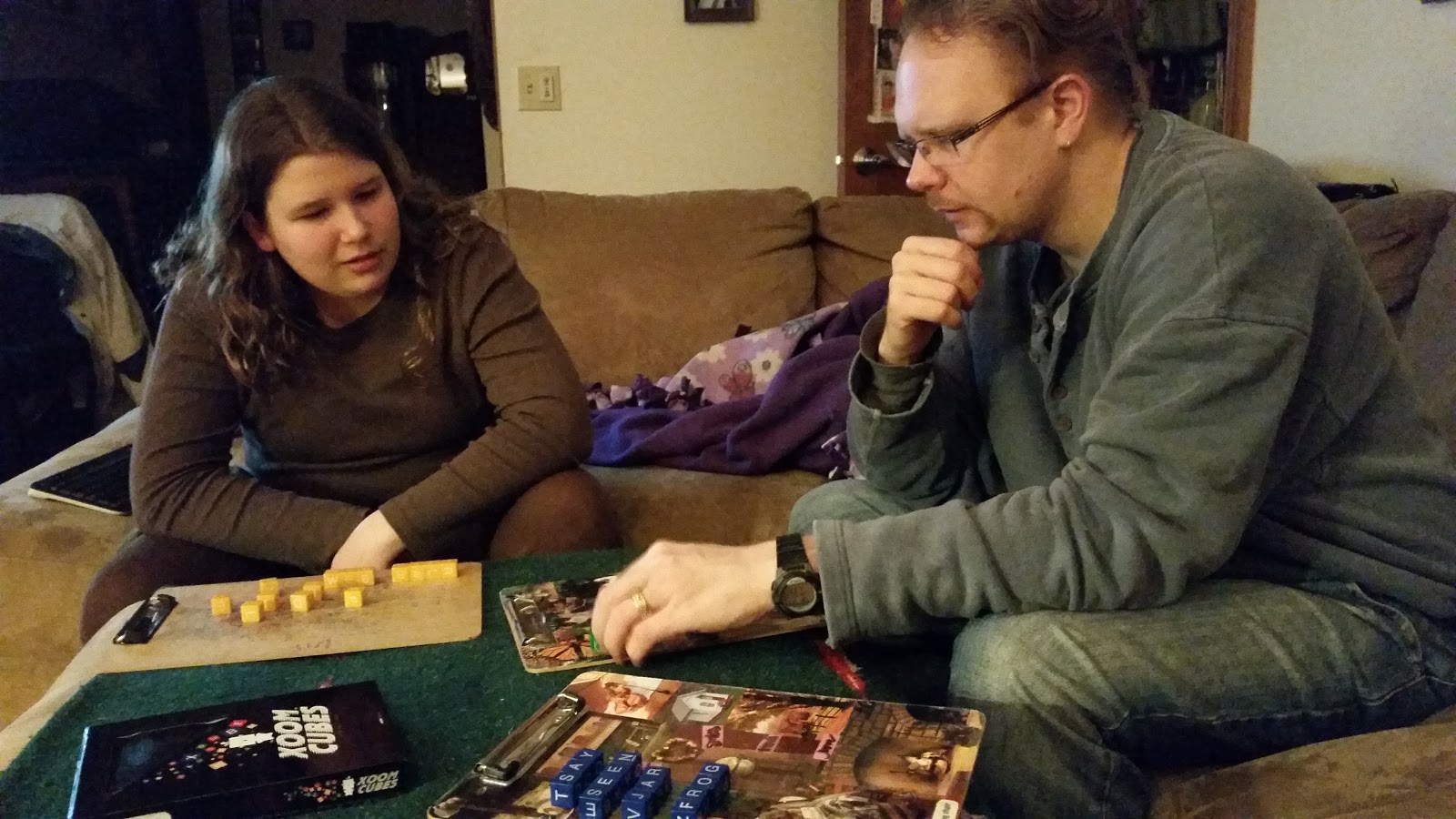
We're still learning all the fun possibilities for game-play with Xoom Cubes, but already they are a giant hit at our house. I attended a Teacher Tuesday at Marbles: The Game Store, and I received this game for FREE!


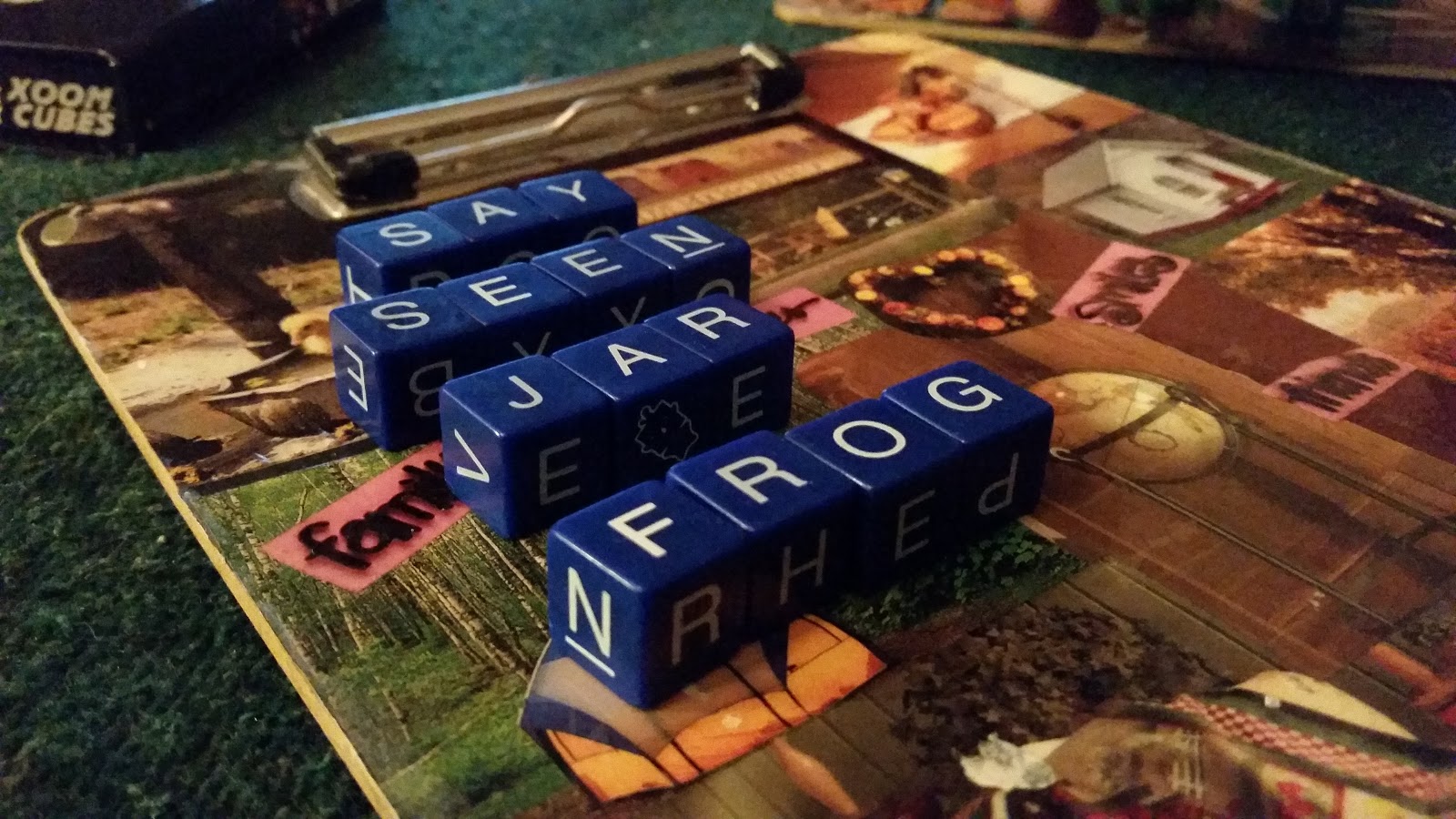
Xoom Cubes is really just a box of alphabet cubes/dice in 4 different colors. One way to play: Each player gets a set of colored dice, rolls the dice, and creates words using as many of their letters as possible.


Variations include using a timer, creating a crossword, allowing re-rolling of unused dice, or pooling all the dice and racing to create words from the pool. Of course, the cubes could also be used with younger kids for matching letters and learning phonics! For more game suggestions and Xoom Cubes challenges, check out the Xoom Cubes website: http://baxbo.com/games/xoom-cubes/ or the facebook page: https://www.facebook.com/xoomcubes.

Tuesday, October 7, 2014

Game Schooling - Games for the younger set...

I also have the great pleasure of walking alongside a friend of mine as she begins the homeschool journey. Her kids love to play games at my house, too!

Among the favorites:

Tenzi - Throw a set of dice (Tenzi is supposed to be with 10 dice, but we started with 5 and worked our way up.) Decide on which number you're going to "collect." Keep the dice showing that number and throw the rest of the dice again. Keep any of the number you are collecting, and then throw the dice again...until all your dice are gone. With older children this can be a speed game. This works on counting and number recognition for the smaller kids:


War - Remove non-numeric cards from the deck and deal the rest between 2 players. Players turn up their top card at the same time. Whoever has the higher number takes the trick. Keep playing until all the cards are gone. Then practice counting even higher by counting who has the most cards!:


Hide and Eek - This game works on the concepts of odd/even and higher/lower for numbers 1-100. There is also a little memory work involved for cards that do not remain face-up. And there is some strategy for where to move the mouse once you've rolled the dice and know whether you're trying to land next to numbers that are odd/even or higher/lower:


Scrambled States of America - This game works on letter recognition (example: find your states the begin with the letter "A") and syllables (example: find a state whose capital has 3 syllables) along with state recognition by shape and location. Fun and quick enough for the big kids to enjoy with the little kids. Bigger kids will catch on to state capitals and nicknames, but this game is not so rigorous that I would include it in the learning games for middle schoolers:

Sunday, October 5, 2014

Game Schooling - Mad Libs card game

Mane LOVES Mad Libs. I don't think I can express in words just how happy Mad Libs make her. If we get her nothing but Mad Libs books for her birthday, Christmas, and Chanukah this year, she would be over the moon. This is serious.

So, when I saw a Mad Libs card game at the thrift store for $1 the other day, I bought it. Don't let the serious face fool you, Mad Libs require your full attention:


As most of you probably know (but just in case you don't), Mad Libs are great for learning parts of speech and sentence construction. The game is played like Rummy, requiring players to make sentences of different lengths for each of six rounds. Cards are color coded for parts of speech.

We'd love to see Mad Libs get rid of the words "weirdo" and "dummy," though, and we'd love to see extension sets with better vocabulary. This game, which can be played similarly, is on our wish list: You've Been Sentenced.

Thursday, October 2, 2014

Game Schooling - Rummy Roots

We have always loved a good game here at Peregrin House! And this year I've been focusing on ways to integrate games into our regular schedule and curriculum. I'm thinking that we should begin calling ourselves Game Schoolers, rather than Home Schoolers. I've been clogging my facebook feed with photos of us playing all our new (and old) games and decided it's high time I get them all recorded in the blog!

One of my very favorite new games is Rummy Roots! I'd been considering all kinds of vocabulary curriculum ideas for the latter half of this year, once we finish Logic of English and was on the brink of purchasing some workbooks when I ran across this game at Heppner's Legacy Homeschool Resources store in Elk River, MN.


The first version of the game is basically "Go Fish," except the draw pile is the "Root Pile," and you "Go Dig!" Both Greek and Latin roots and their English translations are in the deck. You ask for either the Greek/Latin or the English root word to make your match. Players have a cheat sheet with all the roots listed. Later versions of the game are played like Rummy, combining the Greek/Latin roots to create words. A small lexicon is included for assistance in playing the Rummy version of the game.Scanning the list over and over to find the matching root is good practice for using alphabetical lists and good eye training for children with dyslexia. Memorization happens without a person even noticing!

For now, we're going to forgo the root word workbooks and play games!

Rummy Roots has a web page here: http://rummyrootsgames.com/

Saturday, September 3, 2011

This is Just to Say...

I had one of those unforgettable moments recently when I felt the real, pure joy of homeschooling and witnessing my Mane's unfolding thought processes...

Many of you are familiar with the poem by William Carlos Williams that goes like this:

This is just to say

I have eaten 
the plums
that were in
the icebox

and which
you were probably
saving
for breakfast

Forgive me
they were delicious
so sweet
and so cold

Well, Mane learned this poem last year, and we read it again this year in A Family of Poems collected by Caroline Kennedy. It's one of my favorites, and, since it's one of my favorites, we spent some time talking about it. Mane memorized it. We repeat it often.

So, several nights ago, Mane finished the container of peanut butter. Mango came out in the kitchen in search of a snack and couldn't find any peanut butter. Mane launched into a parody of the poem by William Carlos Williams. We were all laughing so hysterically that she decided it was worth writing down. Here are the results:


Related Posts with Thumbnails